Book Launch: All This Safety Is Killing Us

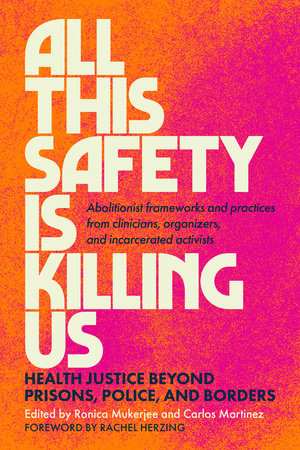
About All This Safety Is Killing Us
A multi-discipline, multimedia guide to abolition through the lens of healthcare and medicine – featuring writings and artwork from 10+ incarcerated and post-detention activists
Exposing how marginalized communities are vilified by “carceral safety” systems, educators and health justice advocates Carlos Martinez and Ronica Mukerjee call for a radical break with reformist strategies in favor of ones grounded in grassroots organizing and abolition.
This panel brings together author and contributors, Ronica Mukerjee, Onyinye Alheri, Leroy Moore, moderated by Pato Hebert.
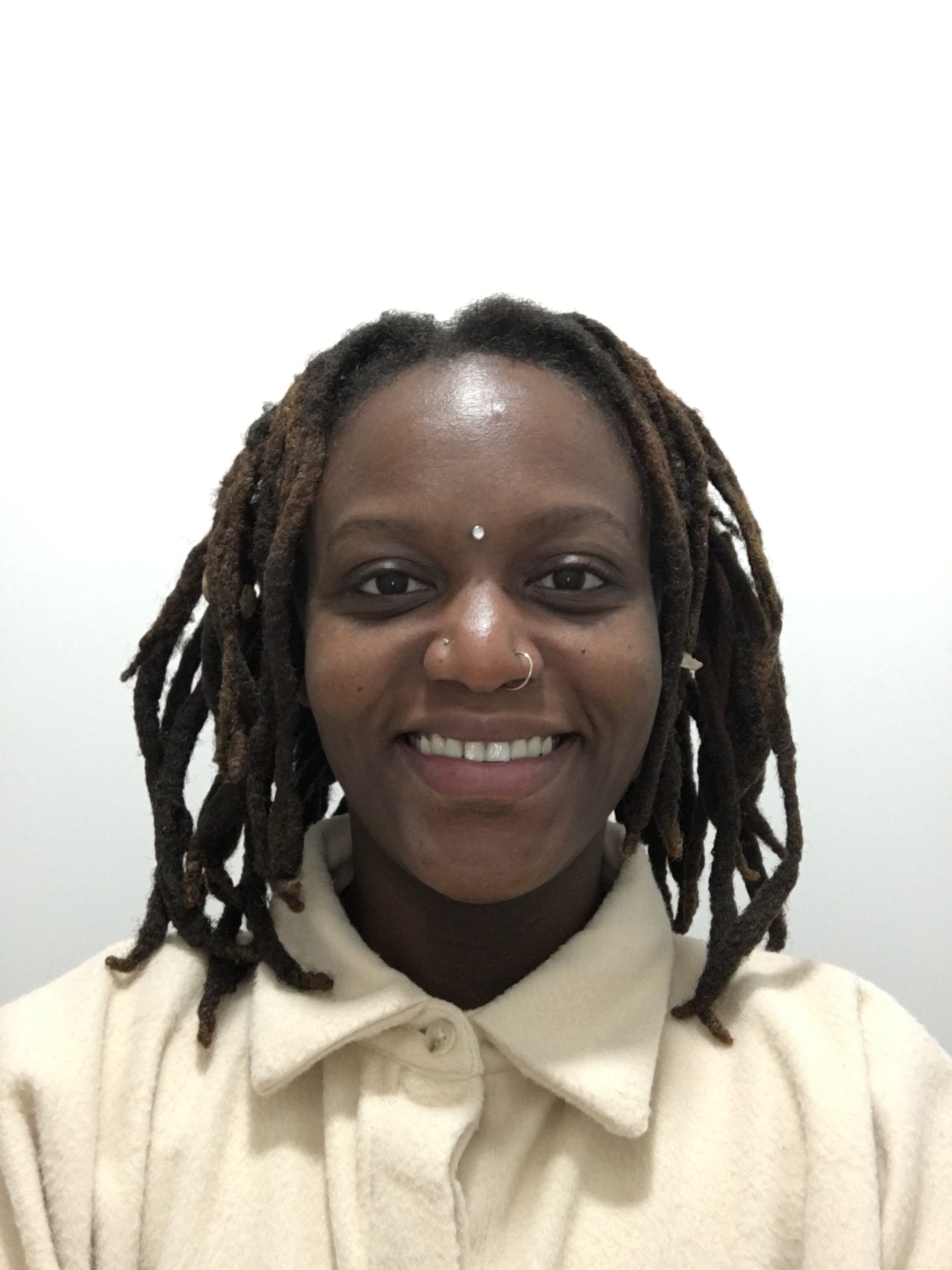
Onyịnye Alheri (Ọ or she/her) is an artist, curator and scholar engaging with international movements that promote peace, harm-reduction and collective healing. Born in Èkó (so-called Lagos, Nigeria), Onyịnye is blessed to have lived in many lands and currently splits time between Mozambique and Mexico. Ọ is engaged in research and knowledge sharing exploring topics including mental health, abolition, harm reduction and more. Ọ earned a bachelor’s of arts (BA) in International Studies & Philosophy from Macalester College and a master’s in social work (MSW) from the University of Maryland, Baltimore.


Front Harvard to The Whitney Museum to Media Engagement for Disability in Johannesburg South Africa, Leroy Moore has more than twenty years of activism, journalism, writing, lecturing on race and disability. Black disabled poet, activist and author of six books on Black Disabled issues from poetry to children books to his recent graphic novel, Krip-HopVol. 1 that was published in 2019 by Poor Press. Black Disabled Art History 101 in 2017 published by Xochitl Justice Press. Leroy F. Moore Jr. is the Founder of the international collective called, Krip-Hop Nation. Since the 1990s, he has written the column “Illin-N-Chillin” for POOR Magazine and then as a founding member of the magazine’s school, the Homefulness and Decolonize Academy. Moore was one of the founding members of National Black Disability Coalition and activist around police brutality against people with disabilities. Leroy has started and helped start organizations like Disability Advocates of Minorities Organization to Sins Invalid and was an early thinker of Disability Justice to Krip-Hop Nation. His cultural work includes film documentary, Where Is Hope, Police Brutality Against People with Disabilities, spoken-word CDs, poetry books.
Leroy is a Ph.D. student in Anthropology at UCLA and member of UCLA’s Hip-Hop Study Group. Recently Leroy co author a chapter entitled, "When Can Black Disabled Folks Come Home?": The Krip-Hop Movement, Race, and Disability Justice in a recent Hip-Hop textbook, Freedom Moves: Hip Hop Knowledges, Pedagogies, and futures. Moore has wrote, sang, and collaborated to do music videos on Black disabled men.
Moore has traveled internationally networking with other disabled activists and artists. Moore has written, sang and collaborated to do music videos on Black disabled men. In July 2019 Leroy Moore under Krip-Hop Nation organized the African Disabled Musicians San Francisco Bay Area Tour with disabled musicians from Uganda, Tanzina and The Democratic Republic of the Congo.
Leroy has won many awards for his advocacy and art from the San Francisco Mayor’s Disability Council under Willie L. Brown to the Local Hero Award in 2002 from Public Television Station, KQED in San Francisco and in 2014, San Francisco Bayview Newspaper named Leroy, Champion of Disabled People in the Media on Black Media Appreciation Night. In 2022 Leroy was chosen for one of the United States Artists awards for his writing/poetry.
Related Links:
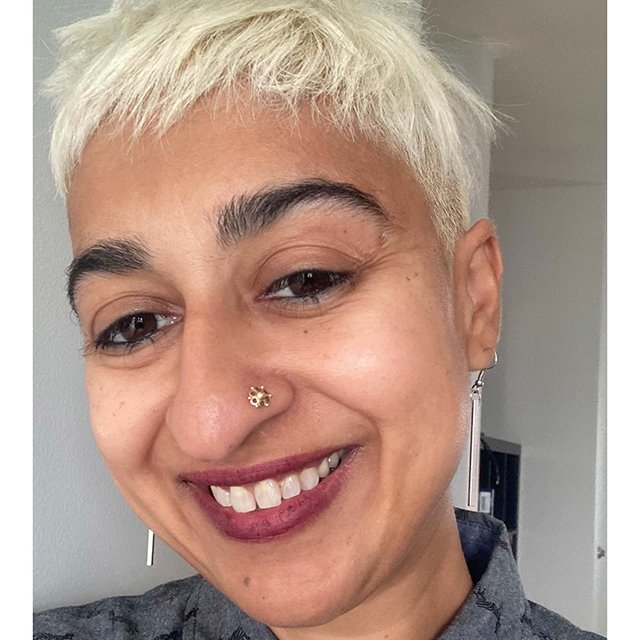
Ronica Mukerjee DNP, MsA is a family and psychiatric mental health nurse practitioner as well as an acupuncturist. Dr. Mukerjee is currently an assistant professor at Columbia University and provides both hormonal care and psychiatric care for trans and gender diverse patients. Previously they livede and worked in Tijuana, Mexico co-directing a refugee health organization she co-founded.
Dr Mukerjee is passionate about border-police-prison abolition as well as racial, economic and health care justice in LGBTQIA+, refugees and migrant communities, for people with substance use disorders, and for people living with HIV. She is the creator of the Gender and Sexuality Health Justice concentration at Yale School of Nursing where she taught for four years. Dr. Mukerjee is senior editor of the textbook: Clinicians Guide to LGBTQIA+ Care: Cultural Safety and Social Justice in Primary, Sexual, and Reproductive Healthcare, published in February 2021 and has co-authored several articles as well as offered expert speaking on various topics.
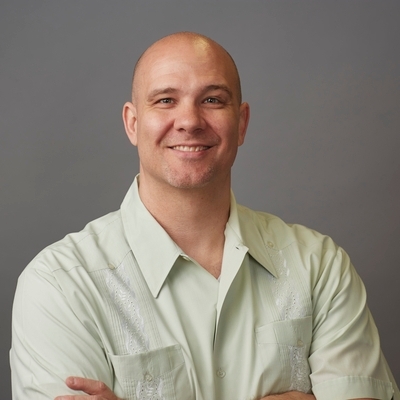
Pato Hebert is a visual artist, educator and cultural worker. He splits time between New York City, and his creative studio in Los Angeles. Born in Idaho Falls, Idaho, Hebert spent his childhood there and in Eugene, Oregon. He also lived in Panamá, where is mother is from. He joined the Art & Public Policy Department at NYU in 2012. Prior to NYU, he was a visiting assistant professor at Reed College and Scripps College. He also taught at Art Center College of Design and the University of California Irvine.
Hebert’s artwork explores the challenges and possibilities of interconnectedness. He is particularly interested in space and place, spirituality and ecology, pedagogy and progressive praxis. He works with photography, graphic design, sculpture, installation, light, text, performance and socially engaged forms. His work appears in museums and gallery settings, as well as community spaces, schools, public architecture and unexpected nodes of circulation. He often works in collaboration with fellow artists, writers, educators, young people, community members and stakeholders.
Hebert has also worked in community-based HIV prevention and advocacy since 1994. Engaging primarily with queer people and communities of color, Hebert has worked in small grass-roots efforts, large community-based organizations as well as international mobilization and advocacy. For many years he led local prevention programs, large-scale outdoor medium campaigns and a national community-based publishing house inside of AIDS Project Los Angeles (now APLA Health). He also worked for nearly a decade with the Global Forum on MSM & HIV (now MPact Global) to help organizations strengthen civil society and push governments to better meet the health needs and human rights of LGBT people. He curated exhibitions and led creative initiatives at the International AIDS Conferences in Vienna (2010), Melbourne (2014), Durban (2016) and Amsterdam (2018). He is also a COVID-19 long hauler, living with the ongoing impacts of the coronavirus since March of 2020 and publicly addressing the pandemic through art, organizing and community building.
Hebert earned his M.F.A. in Studio Art from the University of California Irvine, and his B.A. in Studio Art from Stanford University.
Upcoming Events
IF/Q Studies Collective
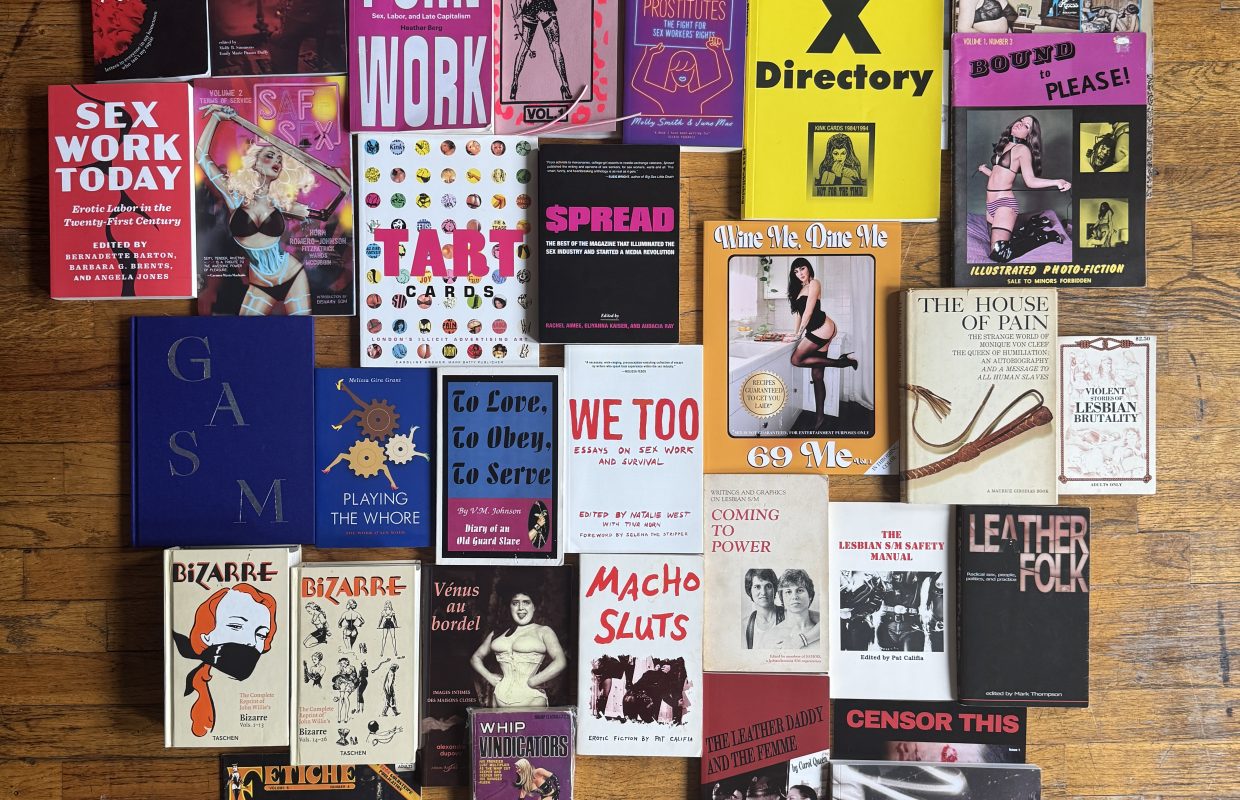
The Sex Worker Archive: A Workshop on Cultural Preservation
CSGS
These Poems Went Down Fighting: On Art, Labor, and Infrastructure

IF/Q Studies Collective
Cut, Copy, Queer: a zine-making workshop
